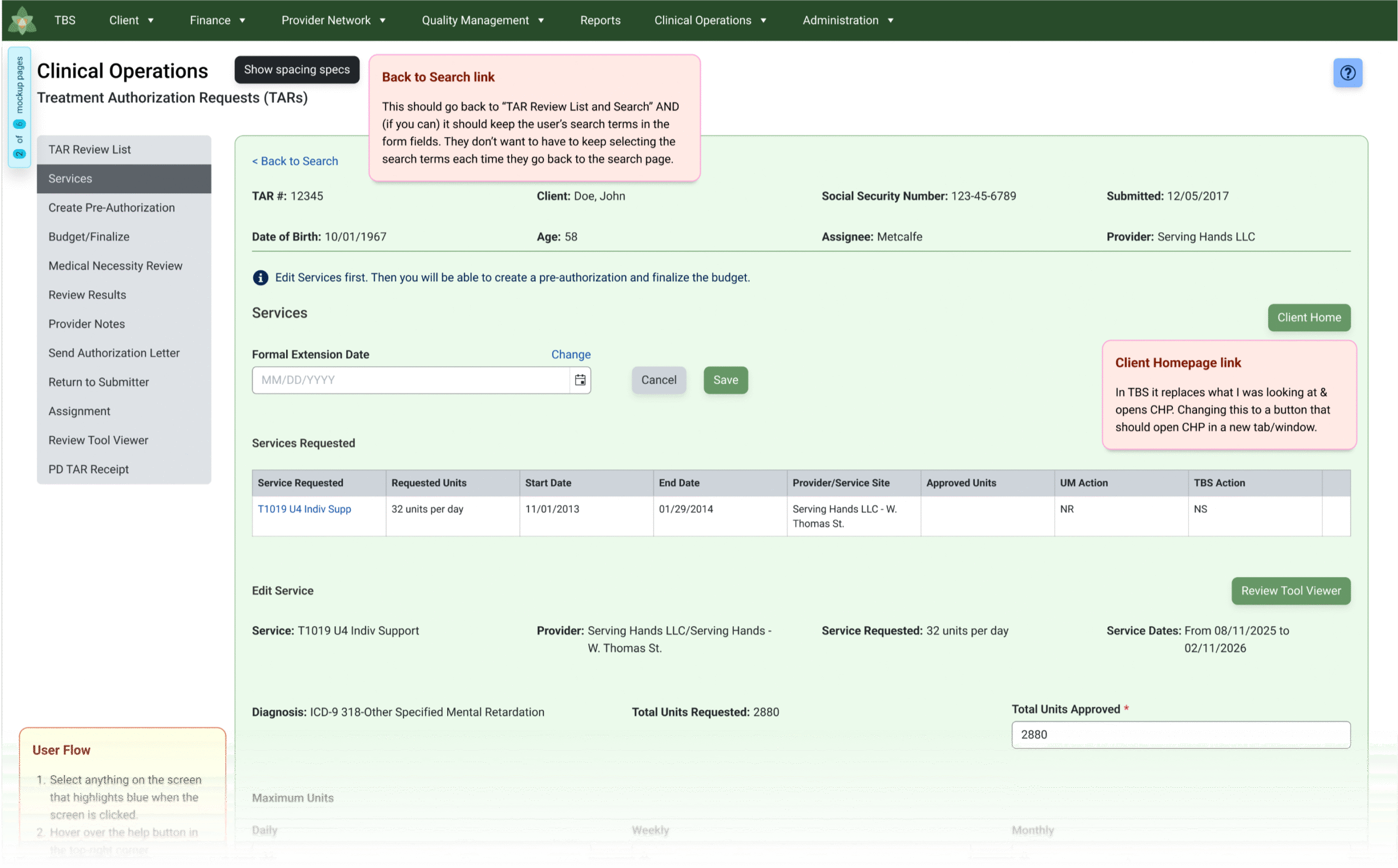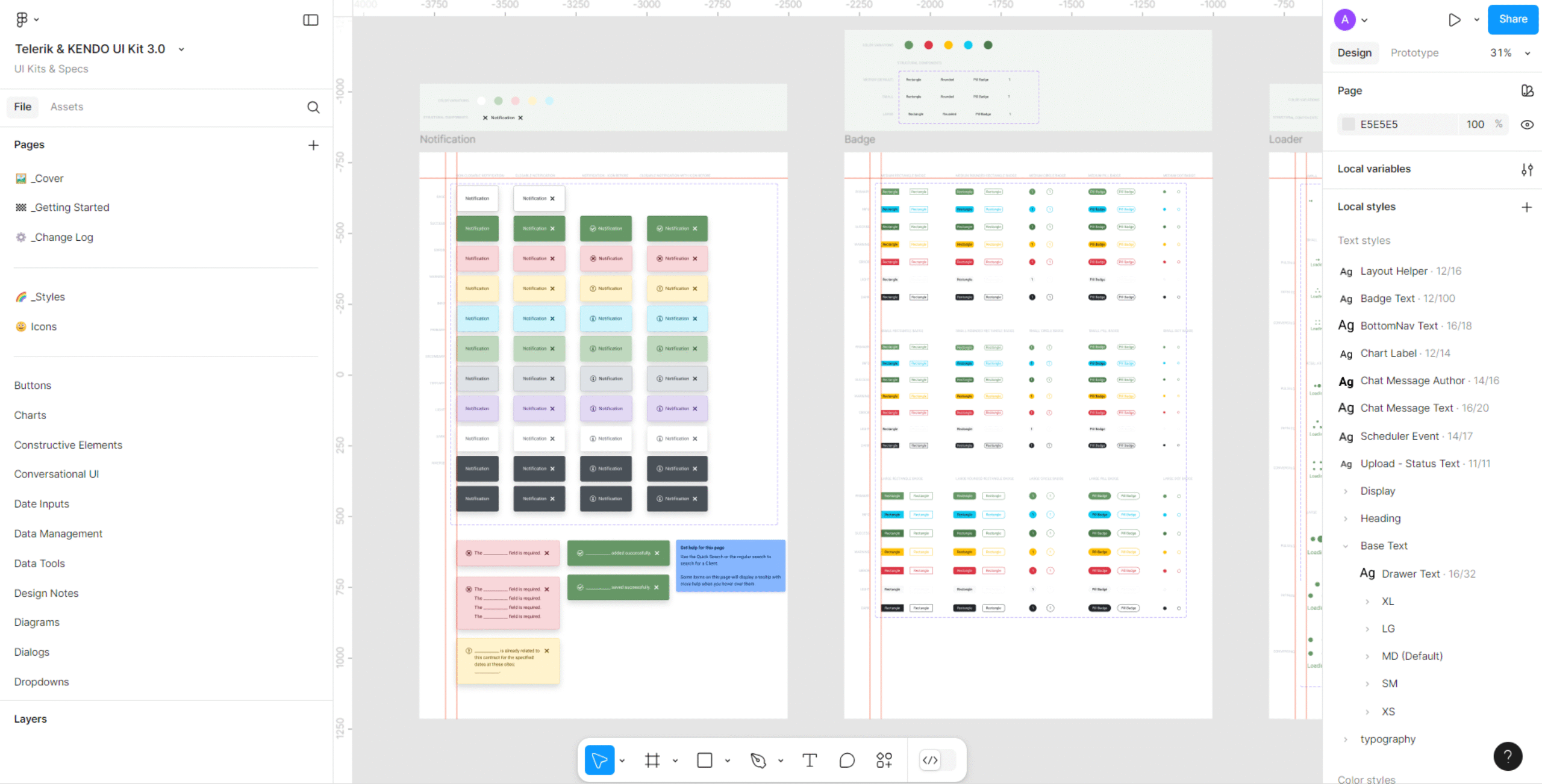
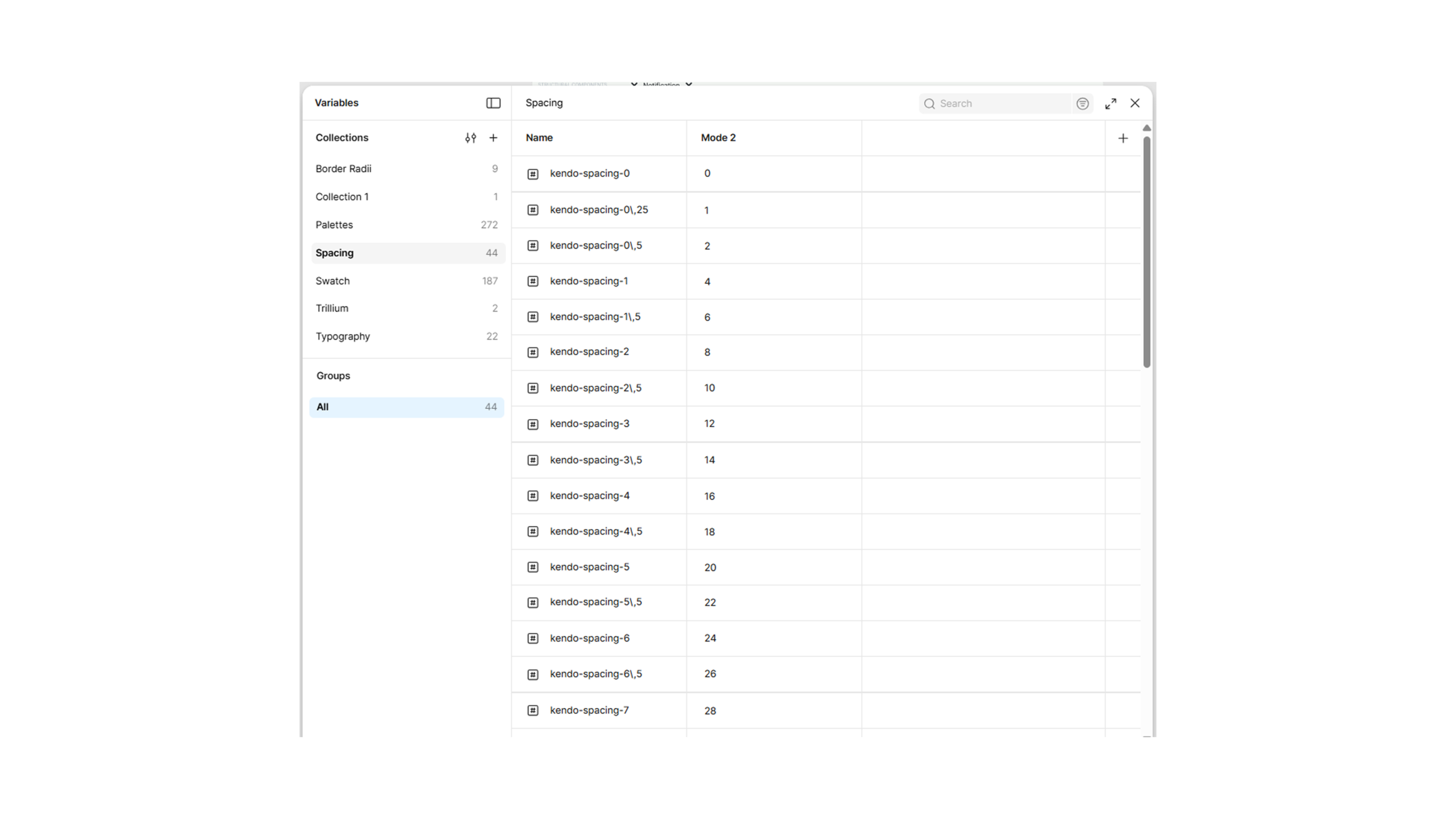
A lot of design teams assume UI drift happens because components aren’t polished enough. In reality, most drift comes from inconsistent use of the design system’s existing tokens—especially in enterprise apps built on large UI kits like Telerik/Kendo.
In my current role, I’m not reinventing the token architecture. Telerik’s variable set is already solid and well-supported by the dev team. My job is to keep designers and stakeholders aligned to those tokens when modernizing large sections of a legacy app. That’s where drift tries to creep in.
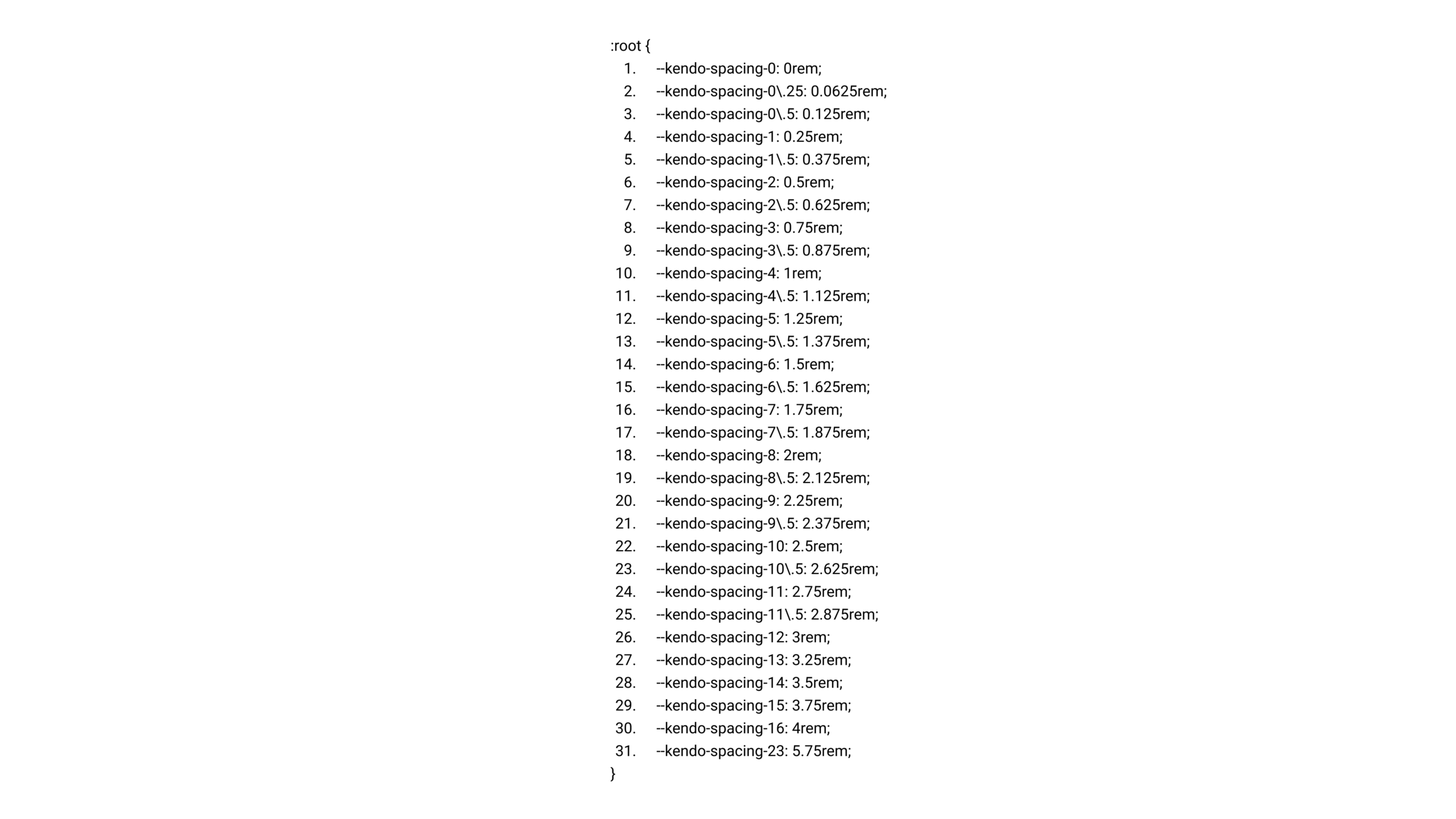
Legacy screens often rely on hardcoded hex values, one-off spacing choices, or visual patterns created years before a consistent system existed. When redesigning these interfaces, I translate every part of the UI back into the Telerik tokens—colors, spacing, typography, elevation, and interactive states. If a legacy screen shows spacing that’s “close to” 8px, I realign it to the correct scale instead of letting a new approximation slip in. If a color doesn’t exist in the system, I find the closest match in the existing ramp instead of creating something new.
That discipline ensures the new screens don’t just look updated—they follow the system. Developers can build them without guesswork because the mockups directly reference the tokens they already use. And because Telerik’s token logic powers the components, the redesigned pages automatically inherit consistent values.
The long-term benefit is simple: fewer one-off decisions, fewer inconsistencies, and a UI that doesn’t slowly fork into multiple visual languages. Token hygiene is about using the existing system correctly, especially when dealing with legacy workflows and complex enterprise layouts.
Pretty components matter, but without disciplined token usage behind them, the UI still drifts. My work ensures consistent UI modernization by rigorously mapping legacy designs to existing tokens. This eliminates one-off visual decisions and prevents UI drift across complex enterprise workflows. Developers gain production-ready mockups tied directly to token logic, accelerating implementation and maintaining system cohesion as the product evolves.
✢✢✢✢✢✢✢✢✢✢✢✢✢✢✢✢✢✢✢✢✢✢✢✢✢✢✢✢✢✢
IC UI Designer • Design Systems Contributor • Figma Libraries, Telerik/Kendo UI, Tokens, Component Libraries